The decision has relevance to the industry as it provides useful clarification as to the correct approach to flood risk policy in the NPPF and PPG.





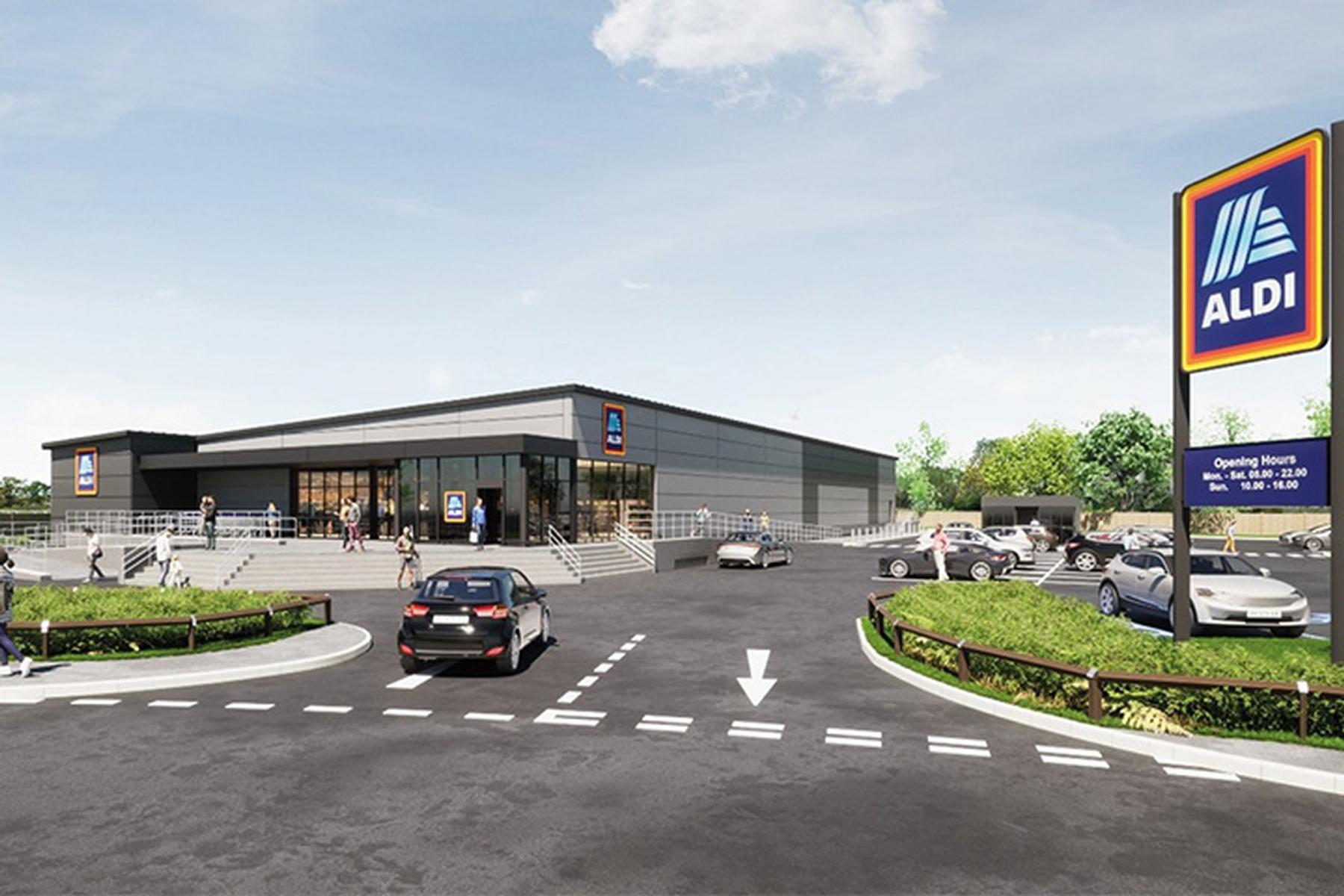
Following an inquiry, Planning Potential successfully secured planning permission for a new Aldi food store in Winnersh, overcoming an objection from the Environment Agency on flood risk grounds.
Planning Potential was instructed by Aldi Stores Ltd. to secure planning permission for a new 1,315 square metre (sales area) food store in Winnersh on a site located adjacent to an existing retail and commercial area. The site benefited from an extant permission for a car showroom.
Located in Flood Zone 3b, the new store had to be carefully designed to prevent flooding and allow for drainage on the site. The resulting design involved raising the store above the identified flood level and included undercroft flood storage voids.
Planning Potential managed the multi-disciplinary project team and pre-application discussions with officers at Wokingham Borough Council. As part of the submission, Planning Potential undertook a Retail Impact Assessment and Sequential Site Assessment.
Communications Potential also ran a successful community engagement exercise, resulting in 93% support from 428 respondents.
Owing to an objection from the Environment Agency on the grounds of flooding, the application was Called-In by the Secretary of State. At the Inquiry, Planning Potential provided evidence relating to retail impact, the retail and flood risk sequential test, and the flood risk exception test.
The decision has relevance to the industry as it provides useful clarification as to the correct approach to flood risk policy in the NPPF and PPG.
The EA had originally objected on the basis that the development was incompatible in FZ3b in principle, applying the PPG advice that less vulnerable development “should not be permitted” in the functional floodplain.
The Inspector rejected this point, agreeing with our case that “should not be permitted” does not mean “must not be permitted” and does not dictate that permission should be refused. Both the Inspector and Secretary of State agreed that although the development’s incompatibility was a negative factor, it was not necessarily determinative.
The Inspector also considered the overarching NPPF policy requirement for development proposals to have regard to all sources of flood risk and avoid “inappropriate development” in areas at risk of flooding. The Inspector agreed with our case that this question should be approached holistically, having regard to the totality of the policy relating to flood risk. Whilst noting the implications of the PPG as a negative factor, the Inspector and Secretary of State concluded that the proposed development accorded with the requirements of national policy (and the Development Plan) on flood risk as a whole. The proposal was not therefore considered “inappropriate” in flood risk terms.
The decision demonstrates that when assessing whether development is “inappropriate” in flood risk terms it is a matter of judgment for the decision maker, applying the policy relating to flood risk in the NPPF and PPG as a whole. It is not necessarily the case that a technical non-compliance of one element of policy on flood risk will render an entire development “inappropriate” in flood risk terms, or result in the refusal of permission.
Summary of achievements
- Managing pre-application community engagement
- Coordination of planning application preparation and submission, including project management
- Management of the Call-In Inquiry, including instruction of Counsel and appearance as expert witness
- Successful demonstration of the merits of the proposals