News
An al fresco future? How Bristol is leading the way on pedestrianisation
7 August 2020
As part of the Business and Planning Act 2020, the Government is supporting businesses that sell food or drink, such as cafes, pubs and restaurants, by introducing a temporary fast-track process to obtain permission from the local council for a pavement licence
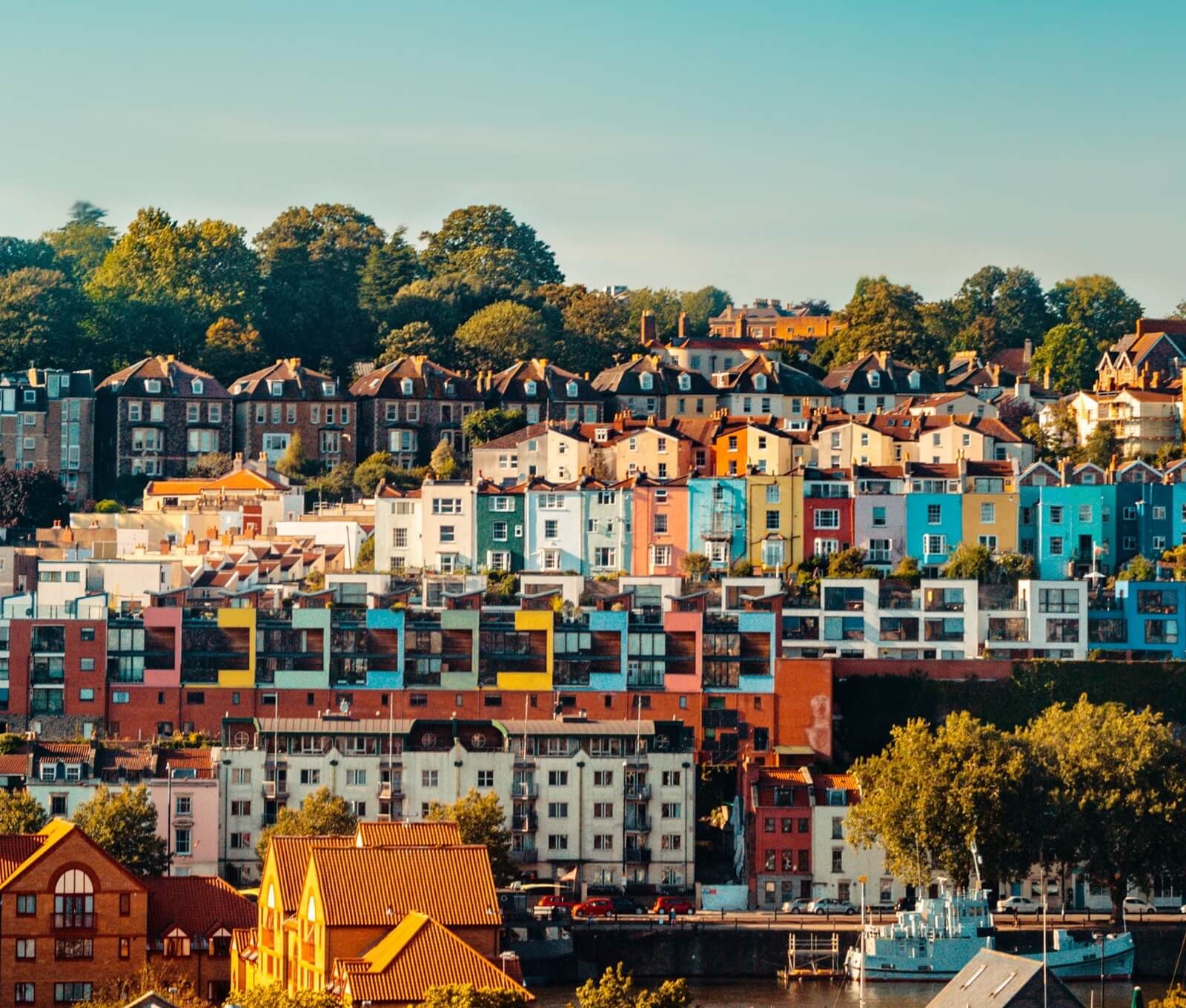
Across all our offices, we have been watching with interest as the country starts to recover from the last few months, and we have been paying particular attention to changes that help encourage economic growth. In our Bristol office, this means watching with admiration as the City Council puts into place traffic measures, many of which have been long mapped out and talked about, at an accelerated rate.
The changes include closing the roads to general through-traffic, and prioritising routes for pedestrians, cycling and sustainable transport along Bristol Bridge and Baldwin Street, enhanced through the creation of temporary cycle lanes in various locations. A sustainable travel advocate’s dream, but also one that has the potential to benefit a much wider audience.
Of particular interest, the City Council has opened up road space usually reserved for parking and driving to cyclists and pedestrians to encourage people to travel by bike or on foot, and to allow for better social distancing.
Pavement widening for local shopping areas, such as Bedminster Parade, Clifton Village and Stapleton Road, has also been rolled out. This will be beneficial for businesses and (importantly) seems to be supported by local residents.
This follows the pedestrianisation of the Old City earlier this year, restricting vehicles during core shopping hours to encourage walking and cycling, reduce air pollution and make more street space available for commercial and cultural activities.
By pedestrianising historic streets such as Corn Street, St Nicholas Street and Small Street, it is hoped that the area will become a more attractive destination and crucially improve the opportunities for local shops, restaurants and bars. This ties into the Business and Planning Act that received Royal Assent on 22 July 2020, which introduced a series of urgent, mostly temporary measures, intended to help businesses, particularly the hard-hit hospitality and construction sectors, to get back to work safely and quickly and encourage economic activity.
As part of the Business and Planning Act 2020, the Government is supporting businesses that sell food or drink, such as cafés, pubs and restaurants, by introducing a temporary fast-track process to obtain permission from the local council for a pavement licence. These licences enable the business to place furniture (such as stalls, tables and chairs) on the pavement outside their premises, meaning they can maximise capacity whilst adhering to social distancing guidelines. This is a smart move and will be of great assistance to city centre operators. It is also proving popular with people in areas that have taken advantage of this new ‘café culture’ approach; you only need to look at Soho where there are already calls to make the tables placed in the pedestrianised streets a permanent feature.
It will not be lost on anyone that it has taken a pandemic for action to finally be taken on measures that many have been calling for to help improve the health of our town centres, both for economic and lifestyle reasons alike. If anything positive is to have come out of the last few months, as I start to venture out into the City again, I’m pleased to see these changes and am hopeful that they will persist in some way or another.
James Tavernor is a Planner in Planning Potential’s Bristol office. For advice, insight, or to share your views on James’ article above, get in touch on 0117 214 1820 or [email protected]